Why Do We Have Wisdom Teeth? Evolution & Modern Issues
You’ve likely heard the horror stories of swollen cheeks and ice packs, or perhaps you’ve spent weeks eating soft foods post-surgery. Wisdom teeth removal is a rite of passage for many young adults, but have you ever stopped to wonder why we have these troublesome teeth in the first place? If they are so often pulled, what is their purpose?
These “third molars” typically appear between the ages of 17 and 25. For some, they emerge without a hitch. For many others, they bring pain, crowding, and a trip to an oral surgeon. It seems counterintuitive that our bodies would produce something that often causes more harm than good.
If you have wisdom teeth that need to be removed, the team at Experience Dentistry can help.
The Historical Purpose of Wisdom Teeth
Travel back in time to the era of early humans. There were no supermarkets, no blenders, and certainly no forks and knives. Survival depended on a diet that was tough, fibrous, and raw. Our ancestors subsisted on coarse foods like roots, nuts, leaves, and tough meats.
Chewing this kind of diet required immense force and durable equipment. This is where wisdom teeth got some actual use. These extra molars provided the necessary surface area to grind down hard substances we don’t commonly eat today. They were essentially the heavy-duty machinery of the mouth.
Furthermore, dental hygiene as we know it didn’t exist. It was common for early humans to lose teeth to decay, trauma, or excessive wear and tear relatively early in life. In this context, a wisdom tooth emerging in young adulthood could serve as a helpful replacement for a lost molar, ensuring the individual could continue to eat effectively. Back then, having that extra set of molars wasn’t just a biological quirk; it was a survival advantage.
The Evolutionary Shift: Why Things Changed
So, what happened? Why did a survival advantage turn into a surgical routine? The answer lies in evolution and cultural progress. As human tools became more sophisticated, so did our preparation of food. We began cooking meat, which made it softer and easier to chew. We developed agriculture, leading to softer diets based on grains and processed foods.
Over thousands of years, these dietary changes meant our jaws didn’t need to work as hard. Consequently, human jaws evolved to become smaller. While our brains grew larger, our jawbones shrank. The problem is that while our jaws got smaller, our genes didn’t get the memo to stop producing that third set of molars.
This evolutionary lag is responsible for the modern struggle with wisdom teeth. We essentially have Stone Age teeth trying to fit into a modern jaw. Most people simply do not have the arch space required to accommodate 32 teeth. This lack of real estate is the main reason why wisdom teeth are now considered “vestigial” organs — parts of the body that have become functionless in the course of evolution.
4 Common Issues with Wisdom Teeth
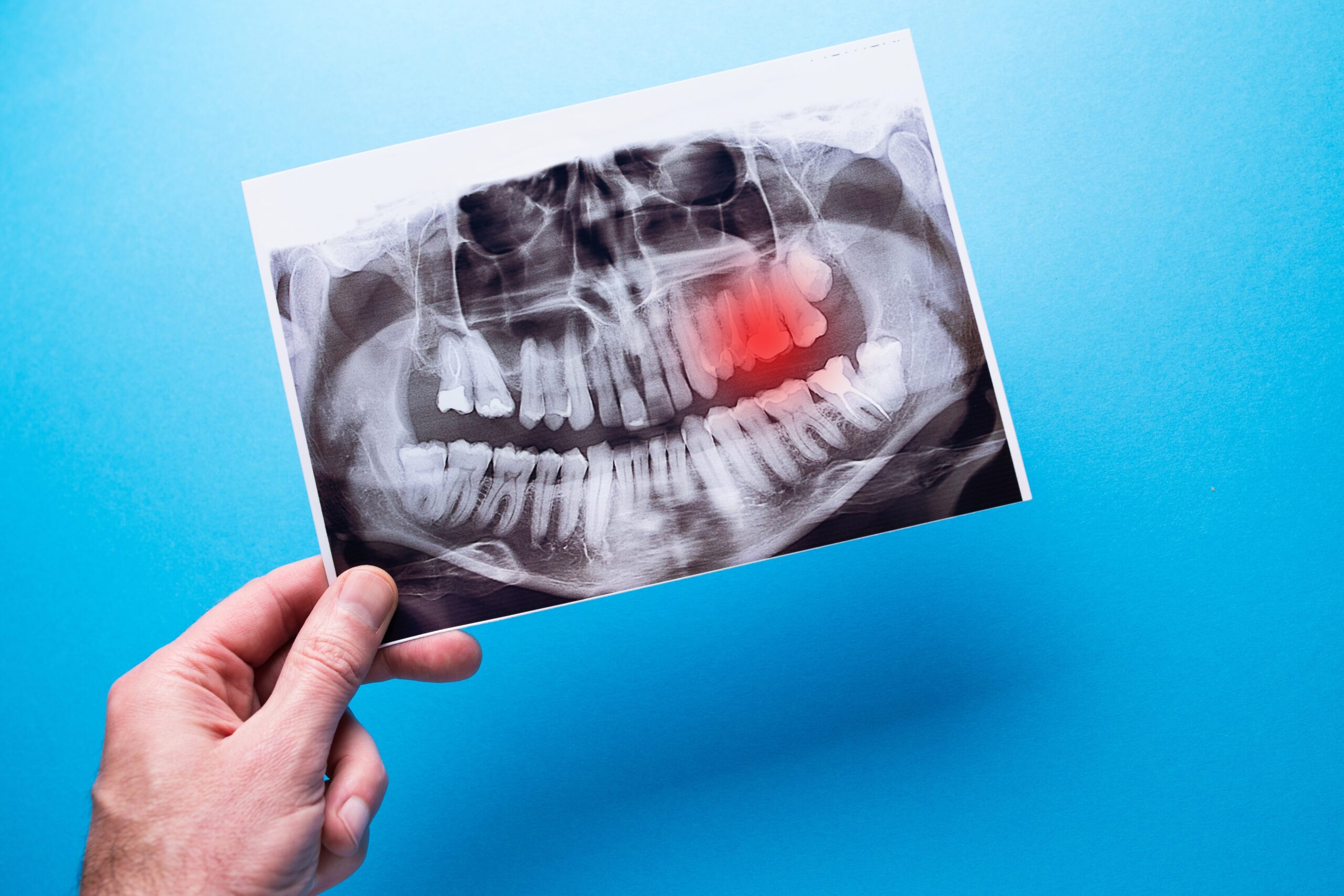
Because of the spatial mismatch in our jaws, wisdom teeth often behave unpredictably when they try to erupt. When a wisdom tooth doesn’t have enough room to enter the mouth properly, it becomes “impacted.”
1. Impaction
An impacted wisdom tooth is enclosed within the soft tissue or bone. It might try to erupt sideways, tilted forward toward the second molar, or backward toward the back of the mouth. This can cause significant discomfort and pressure in the jaw.
2. Infection and Decay
Even when wisdom teeth manage to break through the gums (partially erupted), they present challenges. Their location at the very back of the mouth makes them notoriously difficult to clean with a toothbrush or floss. This creates a breeding ground for bacteria.
Food particles can get trapped under the flap of gum tissue over a partially erupted tooth, leading to a painful infection known as pericoronitis. Furthermore, because they are hard to clean, they are more susceptible to cavities than other teeth.
3. Crowding and Damage
Perhaps one of the most frustrating issues is the damage they can do to their neighbors. An impacted wisdom tooth can push against the second molar, damaging its roots or enamel and increasing the risk of infection in that area. This pressure can also contribute to crowding of the other teeth, potentially undoing years of orthodontic work.
4. Cysts
In rarer cases, the sac within the jawbone where the wisdom tooth develops can fill with fluid, forming a cyst. This can damage the jawbone, teeth, and nerves.
Are There Any Potential Benefits?
Despite their bad reputation, wisdom teeth aren’t inherently “bad.” If you are one of the lucky individuals with a jaw large enough to accommodate them, they can function just like any other molar.
If a wisdom tooth erupts fully, is positioned correctly, and is healthy, it provides an extra chewing surface. It can help grind food and maintain the vertical dimension of the face. In these specific cases, extraction is not necessary.
The key is monitoring. Even healthy wisdom teeth require vigilance because their position still makes them prone to future issues. However, if they are healthy and functional, they can remain a part of your smile.
How We Approach Wisdom Teeth at Experience Dentistry
At Experience Dentistry, located in the heart of Scranton, PA, we understand that the decision to keep or remove wisdom teeth varies for every patient. We don’t believe in a one-size-fits-all approach.
During your consultation, we use advanced imaging to assess the position of your wisdom teeth and the available space in your jaw. We look for signs of impaction, potential damage to neighboring teeth, and risk of infection.
Our philosophy centers on preventative care and patient comfort. If it looks like your wisdom teeth are likely to cause problems down the road — even if they aren’t hurting right now — we might recommend early removal. Removing them at a younger age often results in an easier surgery and faster recovery time because the roots aren’t fully formed and the bone is less dense.
Conversely, if your wisdom teeth are erupting normally and you can keep them clean, we will help you monitor them during your regular checkups. Our goal is to help you achieve and maintain excellent oral health while ensuring your comfort at every visit. Whether you need a simple extraction or a referral for complex surgery, our team is here to guide you every step of the way.
Making the Right Call for Your Smile
The journey of the wisdom tooth from an essential survival tool to a modern dental nuisance is a fascinating look at human evolution. While we no longer need them to chew raw roots or tough meats, they are still a reality for most of us.
Ignoring pain or discomfort in the back of your mouth is never a good idea. Whether your wisdom teeth need to come out or can stay put depends entirely on your unique anatomy. Regular dental visits are the best way to stay ahead of any potential issues.
If you are experiencing jaw pain, swelling, or just want to know the status of your wisdom teeth, don’t wait. Your smile deserves the best care in Scranton, PA. Contact Experience Dentistry today to schedule your appointment and experience the difference that personalized dental care makes.