Veneers vs. Crowns: Which Option Is Right for You?
Your smile is often the first thing people notice about you. It conveys confidence, warmth, and health. However, chipped, stained, or damaged teeth can sometimes make you hesitate to show off that smile. Fortunately, modern dentistry offers excellent solutions to restore both the look and function of your teeth.
When exploring restorative options, two terms come up frequently: dental veneers and dental crowns. While they both improve the appearance of your teeth, they serve different purposes and involve different procedures. Understanding the nuances of “veneers vs crowns” is the first step toward making an informed decision about your oral health during your appointment with Experience Dentistry.
What are Dental Veneers?
Dental veneers are thin, custom-made shells designed to cover the front surface of teeth. They are typically made of porcelain or composite resin and are bonded to the front of the tooth to change its color, shape, size, or length.
The application process is generally conservative. To ensure a seamless fit, a dentist removes a very small amount of enamel from the tooth surface — usually between 0.5mm and 0.7mm. Because they require less removal of the natural tooth structure compared to crowns, veneers are often considered a more conservative treatment.
When are Veneers the Right Choice?
Veneers are primarily a cosmetic solution. They are ideal for fixing minor aesthetic issues such as:
- Severe discoloration or staining that whitening cannot fix.
- Minor chips or cracks.
- Gaps between teeth.
- Slight misalignment.
While veneers offer incredible aesthetic results, they do have limitations. They are structurally weaker than crowns and can be prone to chipping if used on teeth that endure heavy biting forces. Additionally, because they are often categorized as elective cosmetic procedures, they are rarely covered by dental insurance.
What are Dental Crowns?
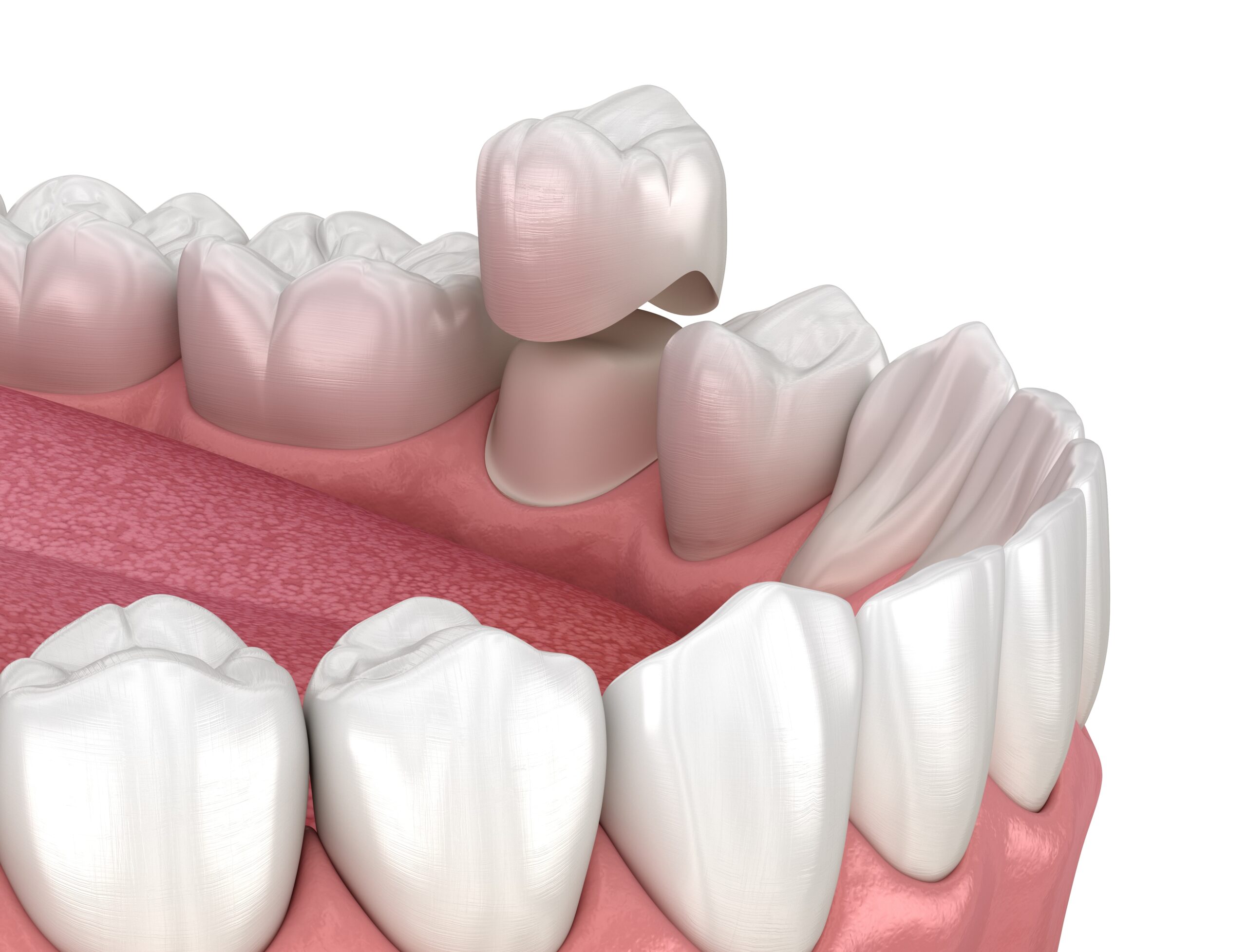
Dental crowns, often referred to as “caps,” cover the entire visible portion of the tooth down to the gum line. Unlike veneers, which only sit on the front, a crown encases the whole tooth, providing significant reinforcement and protection.
The process for placing a crown is more invasive than placing a veneer. To accommodate the thickness of the material (typically porcelain, ceramic, or metal), the dentist must reshape the tooth significantly, removing about 1mm to 2mm of the tooth structure.
When are Crowns the Right Choice?
Crowns are the go-to solution when a tooth has sustained significant damage or decay. They are ideal for:
- Restoring teeth with large fillings or extensive decay.
- Protecting weak teeth from fracturing (often after a root canal).
- Restoring broken or severely worn-down teeth.
- Improving the function of molars that handle heavy chewing.
Because dental crowns restore the function and health of a tooth — not just its appearance — insurance plans often cover a portion of the cost if the procedure is deemed medically necessary.
Veneers vs. Crowns: Key Differences
While both options can give you a beautiful smile, the choice between veneers vs crowns comes down to the condition of your specific tooth. Here is a breakdown of the main differences:
1. Coverage
Veneers only cover the front surface of the tooth, similar to a false fingernail. Crowns cover the entire tooth, acting like a protective helmet.
2. Tooth Preparation
Veneers require minimal removal of natural enamel (0.5-0.7mm), allowing you to keep more of your natural tooth structure. Crowns require more significant reshaping (1-2mm) to ensure the cap fits correctly without being bulky.
3. Durability and Strength
Crowns are significantly thicker and more durable, making them the superior choice for back teeth (molars) or teeth that have been weakened by decay. Veneers are thinner and better suited for front teeth, where biting forces are lower.
4. Cost and Insurance
Since veneers are typically cosmetic, they are usually an out-of-pocket expense. Crowns are often restorative and functional, meaning dental insurance may cover part of the cost depending on the diagnosis.
Which Option Is Right for You?
The decision usually depends on whether your problem is primarily cosmetic or functional.
- Choose dental crowns if: Your tooth is severely damaged, has a large filling, or has undergone a root canal. If the tooth needs structural support to function correctly without breaking, a crown is necessary to restore its strength.
- Choose dental veneers if: Your teeth are healthy and intact, but you are unhappy with their appearance due to staining, gaps, or minor chips. If you want a smile makeover with minimal alteration to your natural teeth, veneers are likely the better path.
Making the Final Decision
Choosing between veneers and crowns is a significant decision that impacts both your smile and your wallet. While this guide provides a helpful overview, the condition of your teeth and your bite alignment play huge roles in determining the best treatment plan.
If you are ready to restore your smile and confidence, it is time to speak with a professional. At Experience Dentistry, we can evaluate your specific needs and help you choose the long-term solution that is best for you.
Contact Experience Dentistry today to schedule a consultation about our dental crown services and find out how we can help you achieve the smile you deserve.